Quickstart Guide
Build and deploy custom SOTA fine-tuned models to serverless Google Cloud TPU or NVIDIA GPU infrastructure in minutes.
Welcome to the AlphaDeep Documentation page. This guide will walk you through the core platform web interface and the 4-step pipeline to build, test, and serve custom models on Google Cloud TPUs or NVIDIA GPUs.
1. Platform Web Workflow
The AlphaDeep platform guides you through a seamless, 4-step pipeline to take raw datasets from upload to highly optimized serverless endpoints:
Step 1: Upload Data
Securely upload raw training images, annotations, or documents to our secure enclaves. The AI Engineering Agent parses and structures the datasets automatically.
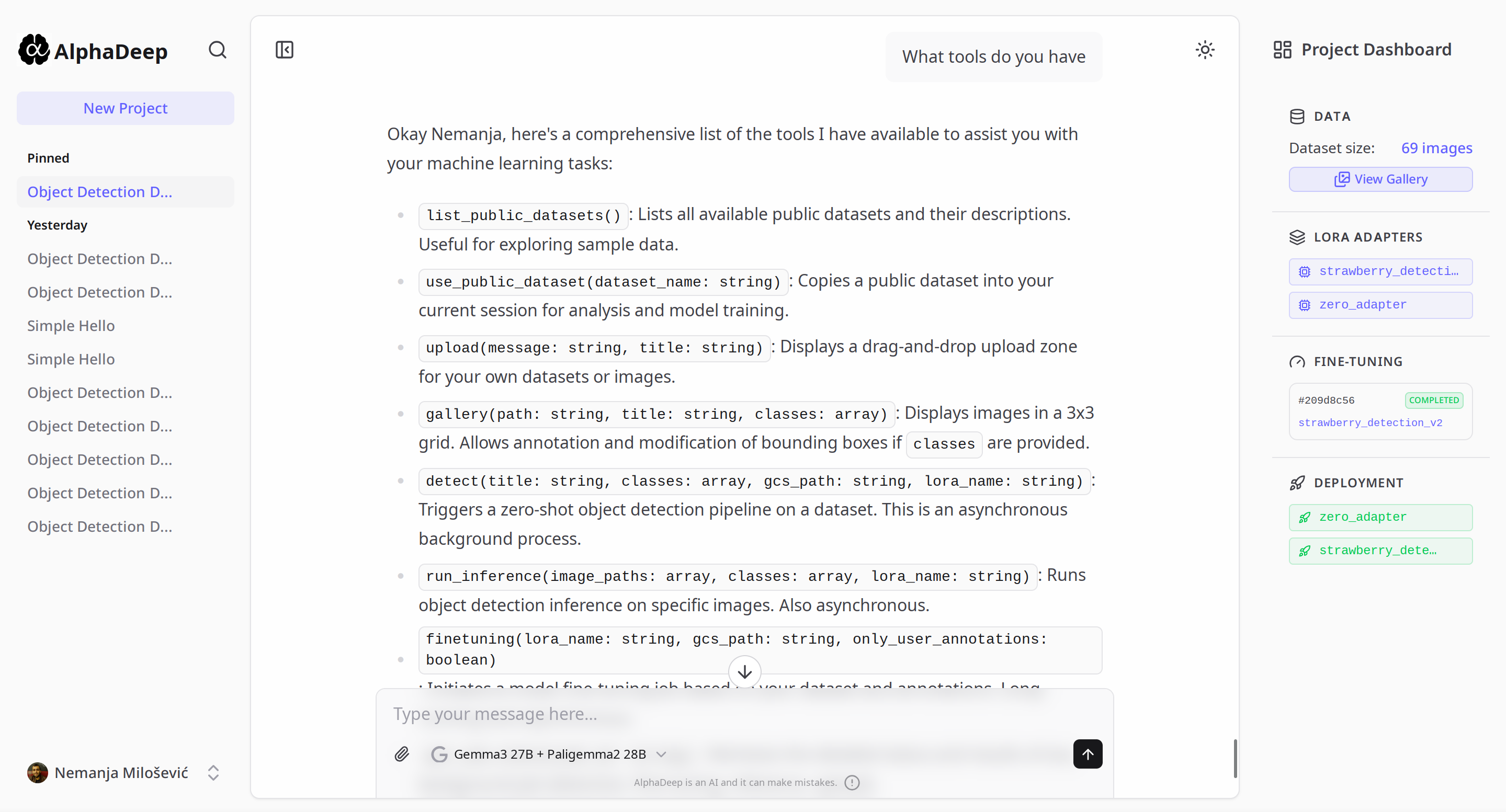
Step 2: Review & Annotate
Inspect labels, bounding boxes, or text annotations. Modify dataset errors using our automated clean-up assistant and integrated human-in-the-loop validation tools.
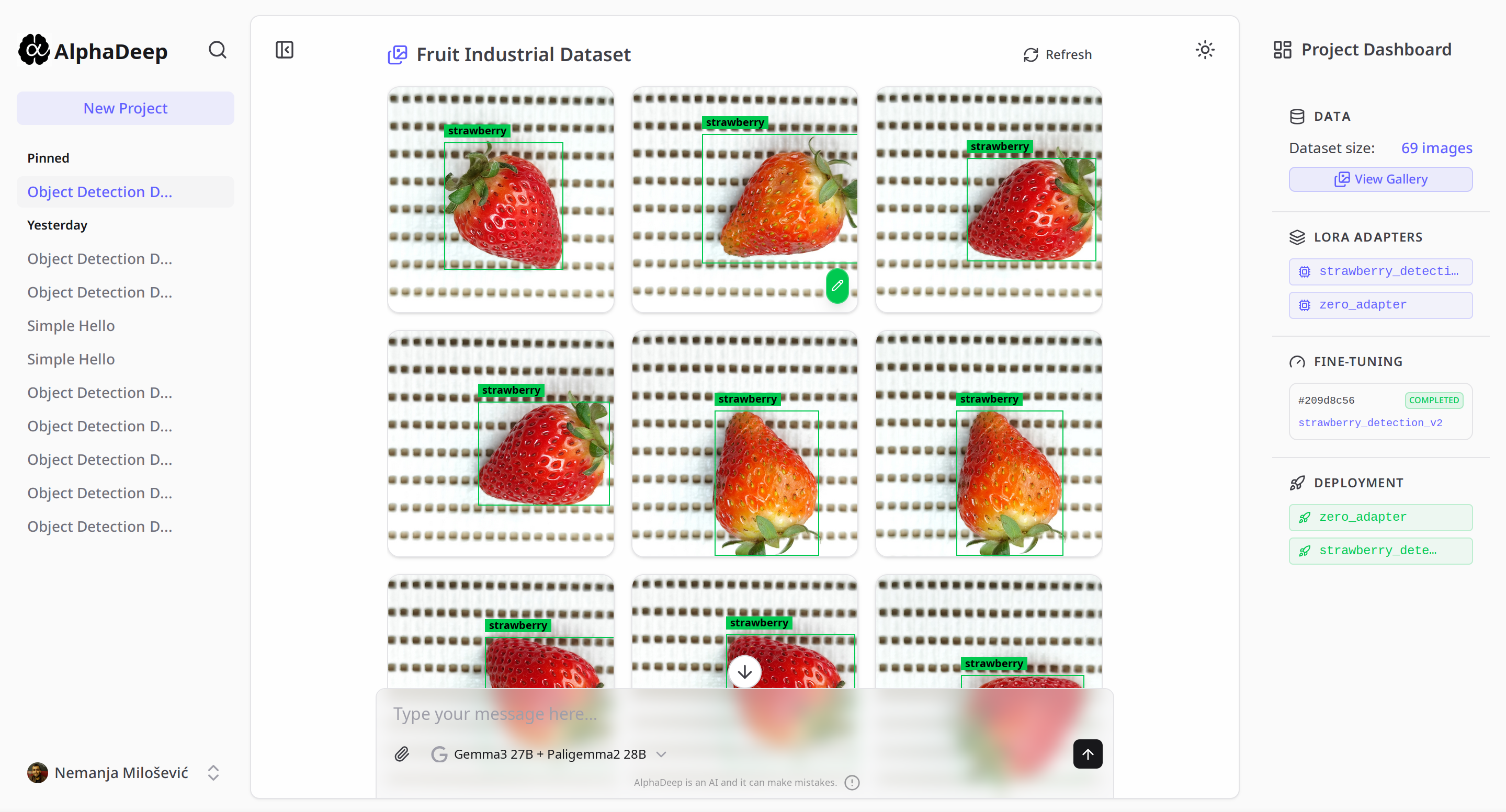
Step 3: Fine-Tune Adapter
Launch training jobs on shared Google TPU or NVIDIA GPU clusters. The AI Agent automatically runs hyperparameter searches and provides real-time training analytics.
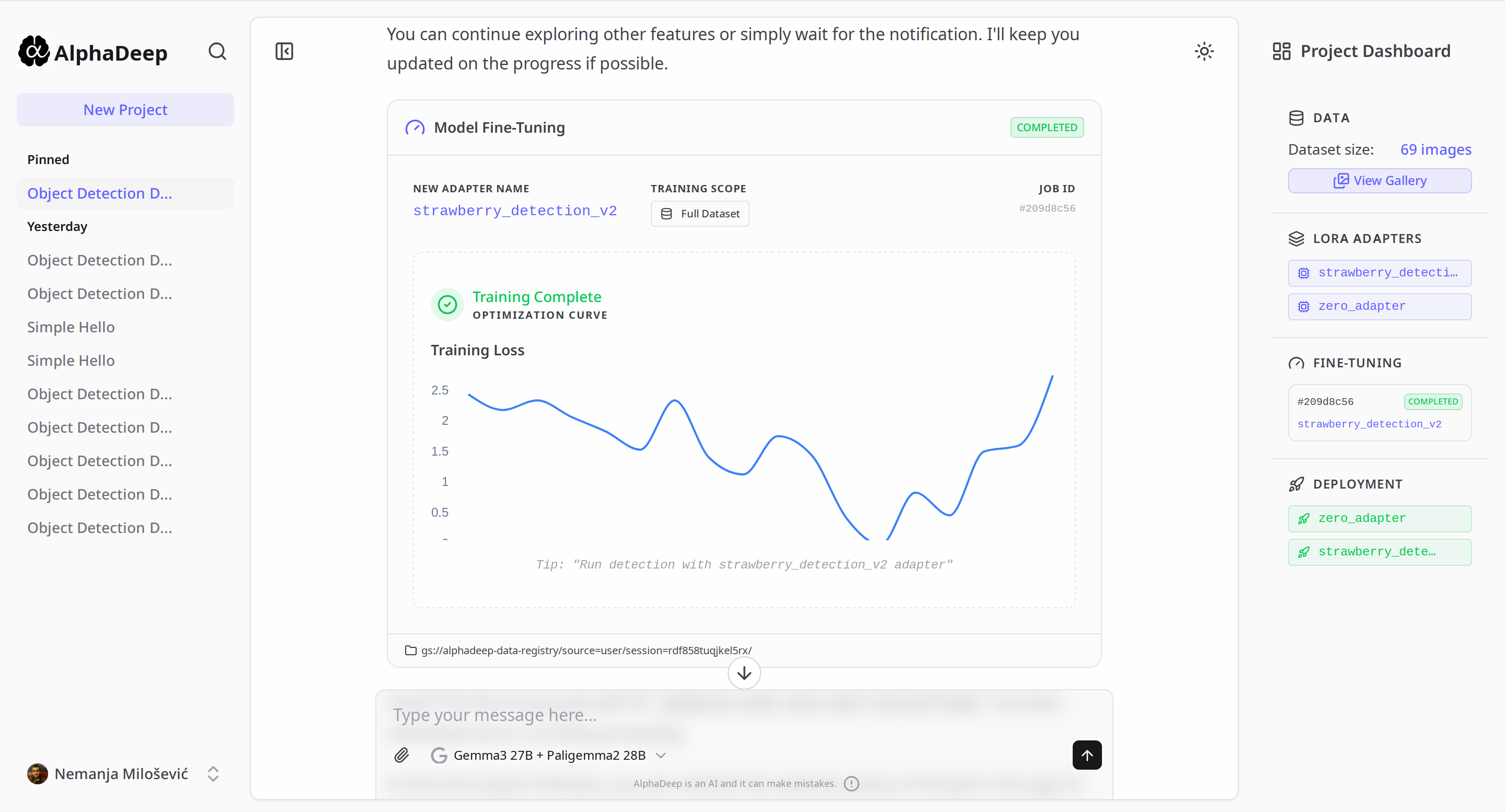
Step 4: Serve on TPUs & GPUs
Deploy instantly to high-throughput endpoints. Test predictions live using our interactive model playground to evaluate performance before production rollout.
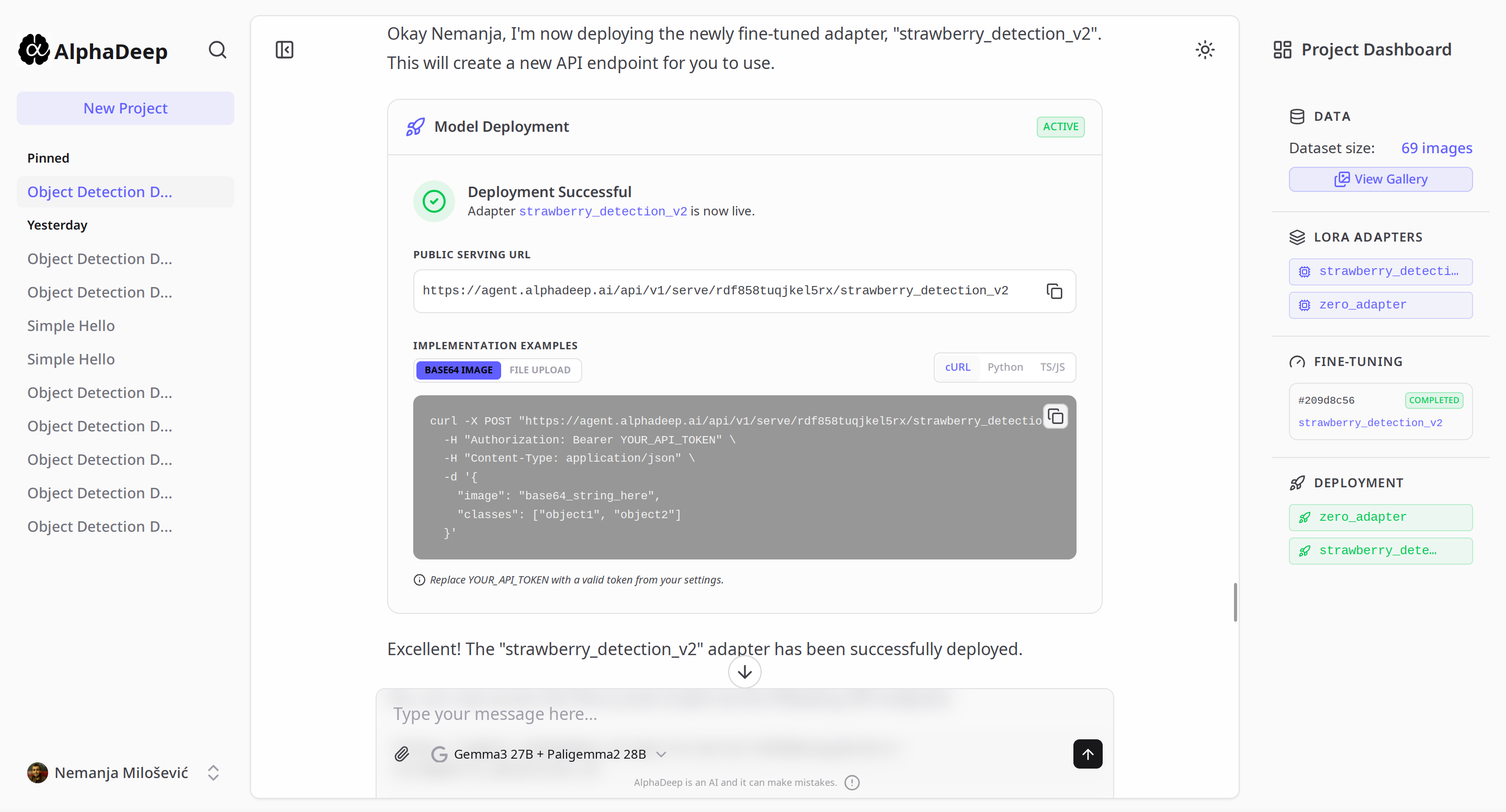
2. Billing & Cost Optimization
Because the open-source Blinx Kernel hot-swaps weights in microsecond-scale timelines, you pay strictly per request for inference. Endpoints automatically scale down to zero when idle, meaning zero billing overhead for cold resources.